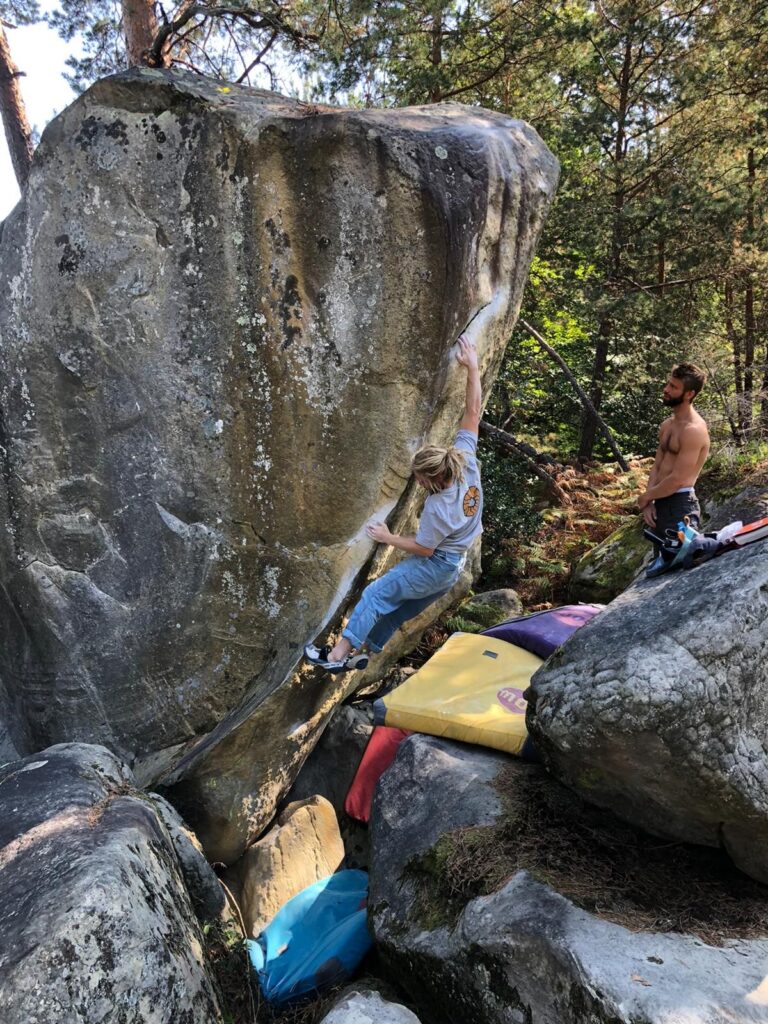


The Art of Shaping the Way People Climb A route setter’s perspective on old school grit, modern movement, and the quiet responsibility of building the sport’s future — one hold at a time.
By Semmy | Route Setter & Climbing Coach
Back When Simple Was Enough
There was a time when route setting was straightforward. You identified a problem, you placed holds that demanded power and commitment, and the climber either had what it took — or they didn’t. Powerful moves on bad holds. Tension. Grit. That was the language of bouldering, and everyone understood it.
It was honest. It was raw. And it worked.
Flying Through the Air
Fast forward to today, and the standard has shifted completely. The new generation doesn’t just pull on holds — they fly between them. They expect movement that flows, sequences that dance, problems that tell a story through the body rather than brute force alone.
The vocabulary has exploded to match it. We’re setting moves that didn’t even have names a decade ago: paddles, laches, step-throughs, runners, foot catches — and plenty of fancy stuff we’re still finding words for. The vocabulary is honestly growing faster than our ability to name it.
Hell Yeah — and Here’s Why
Do I like this shift? Absolutely. Not just as a climber, but as a builder. There’s something deeply satisfying about designing a problem that forces a specific movement — that nudges an athlete into a position they’d never have chosen on their own — and watching it click into place.
The real challenge is threading the needle: push them hard, but don’t make it awkward. Challenge their body, but don’t leave them frustrated or in pain. Give them a session they walk away from feeling like they discovered something new about how they move.
Our youth pros make this extra special. They find cheats you never imagined. They bend the problem in directions that go beyond what I can physically do myself anymore — and somehow, that pushes the whole discipline further than I could have designed alone.
Old School Is Not Dead — It’s the Foundation
None of this means the classic approach is outdated. Far from it. Old school is not just still important — in many ways it’s more crucial than ever.
It’s the essence of climbing. The raw tension, the bad holds, the commitment to a powerful and unglamorous move — that’s where the sport lives at its core. You can still push those problems to the absolute maximum. And crucially, it’s the perfect entry point for someone walking into a gym for the first time, looking for a foothold — literally and figuratively — into this world.
A well-placed beginner problem, rooted in fundamentals, can be the thing that makes someone fall in love with climbing forever. That matters enormously.
A Blessing and a Burden
We route setters shape the way people move through problems — and through the sport. We decide what beginners first encounter. We decide what pushes the elite. We decide what feels joyful, what feels challenging, and what makes someone come back next week instead of never again.
That is a blessing. And it is a burden worth carrying with care.
Kind regards, Semmy